What I am is What I am
By Barbara Sanchez
I recognize that there is a shift happening within me to be my WHOLE self or true self. It is getting difficult for me to compartmentalize pieces of who I am. In this new life phase, I must speak my truth to reconcile who I am with who I was, and to define myself as I am and who I want to be. I am a writer. I am a feminist. I am a wife. I am a mother. I am a woman of colour. I am a child of God. Some of these I am statements do not come easy to me. It’s an act of self-revelation and as the brilliant writer Audre Lorde, in her essay “The Transformation of Silence into Language and Action,” stated because I am myself- a Black woman warrior poet doing my work come to ask you, are you doing yours[1]? So writing this article is me doing my work by transforming my silence into language and action to face the issues in my heart.
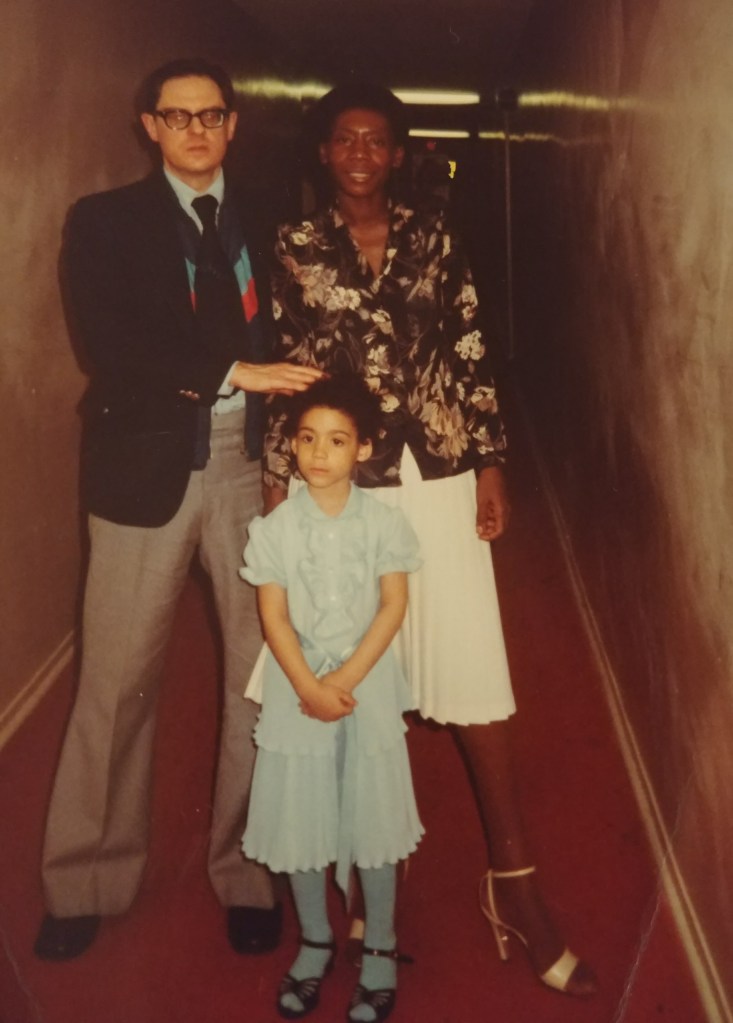
For me to define myself completely, I must define what I am. My racial identity has been a struggle for me sometimes more than others, but part of doing my work is recognizing this discomfort within myself when it comes to defining my race. As a woman born to a Jamaican mother with rich brown skin and a white Canadian father with Irish, Scottish and British roots, there are several categorizes to label my cultural heritage but which one do I feel at ease with? Mixed, Multi-racial, Biracial or Black woman? Two years ago, I started a blog and called it tales of a mixed girl so I have made a choice. The purpose of the blog was to create a space for mixed women to share their stories on racial identity and their lived experience as being mixed in Canada. Only this title did not sit well with me.
As Zadie Smith, in her book Changing my Mind: Occasional Thoughts and Essays so powerfully describes “but to mention the double is to suggest shame at the singular[2].” It’s also for this reason I changed my view on how I saw certain hair products advertised solely for the mixed girl demographic. For example, when I discovered the hair product Mixed Chicks I felt finally – a hair product just for me to deal with my unruly frizzy/curly hair. In a strange way the brand Mixed Chicks made me feel validated by recognizing me as mixed and my struggle with my hard to manage 3C curl pattern hair. However, my good feelings soon wore off because I felt my newfound inclusion came at the exclusion of other women of colour – Black women.
I remember one day I was at work on my lunch break getting a sandwich at the local deli within the office building and a black girl that worked at the deli complimented me on my hair and asked me what products I use. I told her Mixed Chicks and then began a very awkward social exchange between her and I. She said “Oh” in a short and curt manner and her smile and friendliness toward me quickly disappeared. She said ‘Oh’ but I felt like it really meant “well excuse me, this girl thinks she’s special” kind of way. I could also tell that she as a dark skin black female was hurt by the separation between her and I as a beige skinned female that lied within the name Mixed Chicks. It brought on a host of questions, like can only mixed race girls use the product? Do you have to look a certain way to use the product? Who defines what mixed looks like? And for me it was though I found myself in a position to defend the product name. “Yeah, that’s just the name of the product but it can be used for everybody,” I said feeling foolish and exposed. In that brief encounter I felt like I had reneged my blackness to embrace otherness. That is also why I cringe a little when I see Instagram photos with the hashtag “mixed chicks.”
Smith writes in her book Changing my Mind where she recalls reading Barack Obama’s book “Dreams of my Father: A Story of Race and Inheritance. The book is an autobiography about his experience growing up as the child to a white mother an African father. It goes beyond race and it is ultimately about him finding himself and defining his destiny. In his book he makes reference to a character named Joyce. She was mixed with African, Italian, French and Native American he met at a party and she was insistence that everyone know that she was mixed. Years ago I read the same book and took notice to the way Obama ripped this character to shreds for trying to differentiate herself from the rest of the black folks at the party. She argued her Italian heritage should be counted just as much as her African American linage and skin colour should not determine whether she is more black or white.
I’m not black…I’m multiracial…why should I have to choose between them? It’s not white people who are making me choose…No-it’s black people who always have to make everything racial. They’re the ones making me choose. They’re the ones who are telling me I can’t be who I am…[3]”
It is this reason why the title Tales of a Mixed Girl for my blog did not feel right. Was I being a Joyce? Quick to let my white heritage be known to differentiate myself from my black heritage? It is these complexities of claiming biracial status that brings me back to my 13 year old self remembering when my white best friend said I could pass for white if it wasn’t for my hair. She said it as though it were a good thing and I felt in that moment subconsciously she was letting me know if I wanted to pass (for white) I found an ally who would keep my secret safe and help me enter into a world of white privilege. But this was not my wish. My aim was then to simply be myself and my desire now is to define who that is.
My resistance to naming the blog tales of a mixed girl is also based on the stereotypical image of a mixed woman with black and white parents having light skin with “good hair.” The reality is that we as a society are all mixed. The concept of race itself is a social construct that has no meaning expect for the meaning and stereotypes that dominate society has placed on the colour of a person’s skin.
It’s the same reason why the Shea Moisture Advertisement sparked such controversy. The hair and skin line designed for Black women made an attempt to expand its target audience by airing a commercial featuring two white women – one blonde and one red head discussing their hard to manage curly hair. The advertisement featured one Black female with light skin and long flowing cascading curls. She spoke about people throwing things in her hair when she was a kid because she was different. By all accounts, the woman selected to represent all Black women was a mixture of black and white parents. This is also an assumption on my part. But I assume because in a weird way I know. I see myself in her. I believe the backlash of the ad within the black community stemmed from a lack of representation of dark skin black women that ultimately resulted in Shea Moisture pulling the ad and issuing an apology stating “We really fucked up”. I believe because there are so many shades, shapes and hair types within the Black community there is no one type fits all when it comes to representation. There has long been a beauty double standard when it comes to the portrayal of Black women in North America. In the book Politics of Black Women’s Hair by Dr. Althea Prince, she writes…
In the wider community, the Black woman’s natural hair falls low on the scale of beauty. This is no surprise, as it is clear that the dominant beauty paradigm that gets affirmed falls within the Eurocentric, hegemonic culture. This beauty paradigm promotes and idea of European facial features, light or white skins and straight hair.[4]
This insight has led me into a different direction with my blog. I have decided to change the name of the blog. I feel tales of a mixed girl refers to one type of racial mix: a child to white mother and a black father or vice versa. Much like the woman featured in the Shea Moisture ad. The new title Diverse Women’s Collective, I feel is more inclusive and does not play to colorism but includes the variety of mixes that exists in Canada whether it be dark, light, or in between skin. With this title, there is room and space for us all to simply BE and share stories as a collective group to encourage, educate and heal. It is in the spirit of unity and self-acceptance, that I have renamed the blog Diverse Women Collective (DWC).
The mandate is to celebrate women of colour – all shades, hair textures, and body types. It is also to focus on exploring themes of racial identity, inter-racial relationships, feminism, and diversity. The aim is to create an on-line community for diverse women to share their stories, connect and inspire each other.
[1] Byrd, P.R., Johnnetta, B.C., & Guy-Sheftall, B. (2009). The Transformation of Silence into Language and Action. I Am Your Sister, 40. (Smith, 2009)
[2] Smith, Z. (2009). Changing my Mind: Occasional Essays. Toronto, ON: Penguin Group, 141
Author Zadie Smith shares her views as being a multi-racial woman who identifies as a Black writer.
[3] Smith, Z. (2009). Changing my Mind: Occasional Essays. Toronto, ON: Penguin Group, 141
Author Zadie Smith shares her views as being a multi-racial woman who identifies as a Black writer.
[4] Prince, A. (2009). The Politics of Black Women’s Hair. Toronto, ON: Insomniac Press, 15.
Author Althea Prince interviews Black Women in North America to share their relationship with their hair.
 Diverse Women Collective